Sam's Spray Foam Insulation
(623) 239-5345
Why Ultra-Low Spray Foam Prices Can Cost More Later in Buckeye
Why Ultra-Low Spray Foam Prices Can Cost More Later in Buckeye
A surprisingly low bid can look like an easy win. The trouble starts when the number hides a smaller scope, thinner application, unknown material, or weak jobsite controls. Property owners rarely buy the same job from every bidder, even when each proposal uses the words spray foam.
The smarter comparison looks past the total. It asks what area will be treated, what product will be used, what thickness will be applied, how surfaces will be prepared, and what happens if the finished material does not perform as promised.
For Buckeye homes and buildings, this matters in attics, metal shops, garages, wall cavities, and roof assemblies. Heat exposure can be intense, and poor spray work can stay hidden until the project is finished. Property owners comparing bids should understand what goes into a professional spray foam insulation installation before judging a quote by price alone.
A Spray Foam Bid Is More Than the Material Price
The chemical product is only one part of the job. The contractor pays for trained labor, heated hose equipment, proportioning equipment, fuel, protective gear, masking, ventilation, setup, maintenance, travel, and disposal.

A professional bid may include surface prep, old material removal, difficult access, lifts, fire-protective coatings, or repairs around penetrations. Another bid may leave those items out. That is why a price quoted per inch or square foot needs context. The number is not useful until you know exactly what it buys. The final scope can include several types of work. Our insulation services page explains the systems we install for homes and larger properties.
A Spray Foam Bid Is More Than the Material Price
The chemical product is only one part of the job. The contractor pays for trained labor, heated hose equipment, proportioning equipment, fuel, protective gear, masking, ventilation, setup, maintenance, travel, and disposal.
A professional bid may include surface prep, old material removal, difficult access, lifts, fire-protective coatings, or repairs around penetrations. Another bid may leave those items out.
That is why a price quoted per inch or square foot needs context. The number is not useful until you know exactly what it buys.
The Hidden Math Behind an Extremely Low Quote
Start with thickness. One contractor may propose two inches of closed-cell material. Another may quote a lower number for one inch. Both may describe the project as a wall or roof application.
Next, confirm measured surface area. Floor area is not always the same as roof-deck or wall area. Slopes, gables, tall walls, and framing can change the amount of material needed.
Cell type matters too. Open-cell and closed-cell systems use different amounts of chemical and deliver different properties. A customer who compares them only by price can mistake two different assemblies for the same product.
A written quote should make these differences visible before the deposit is paid.
What Poorly Applied Foam Can Look Like
Poorly applied spray foam can show warning signs soon after installation or months later. Problems often trace back to mix ratio, surface temperature, spray thickness, or weak prep work. Property owners should know what to look for so they can raise concerns early. The signs below can point to material or application issues that deserve a closer review.
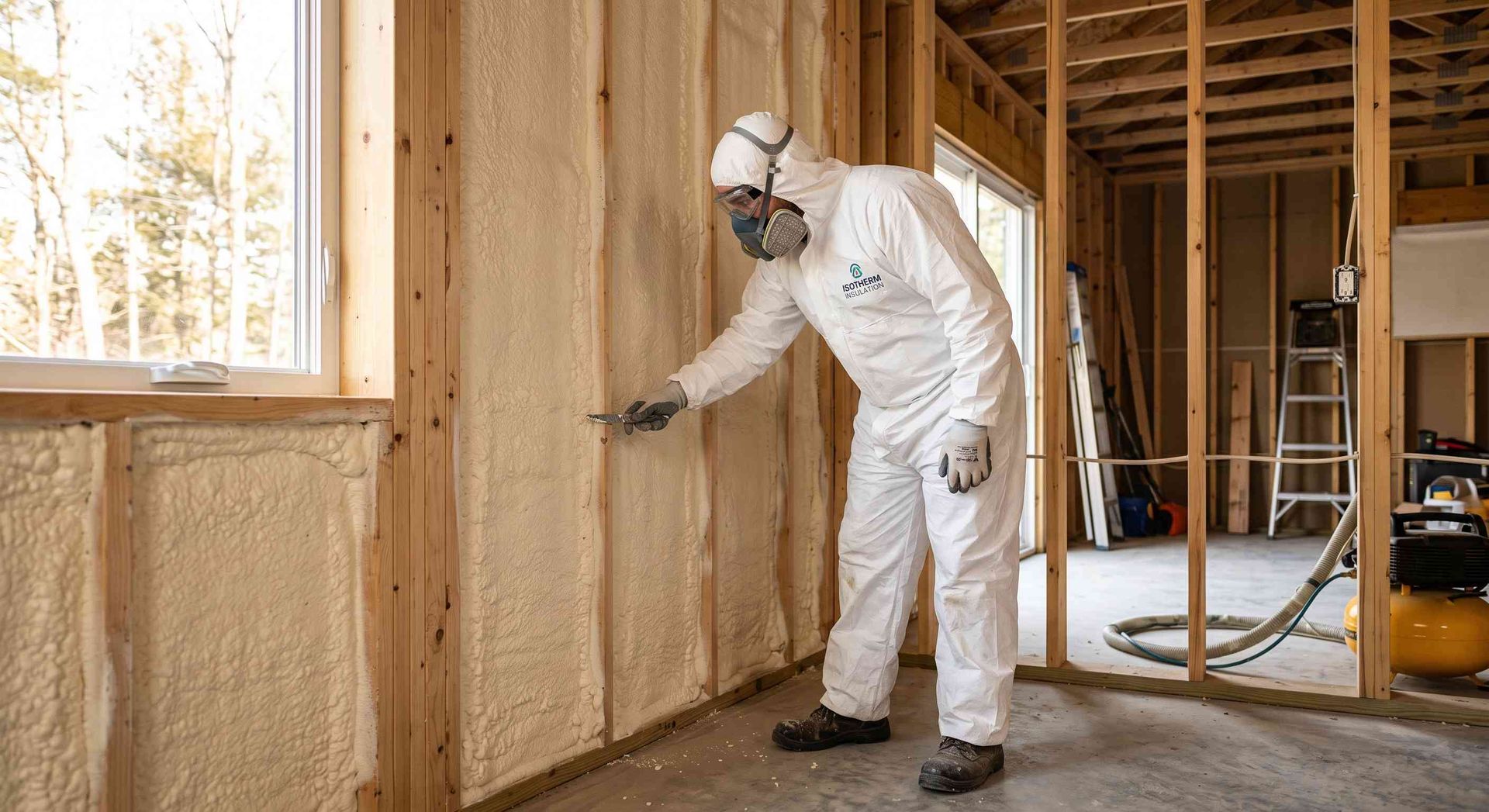
These warning signs do not always prove that the material has failed, but they do deserve attention. A qualified installer should review the affected areas, explain what caused the problem, and document any needed repair work. Catching issues early can help protect the building and prevent more costly fixes later. Failed material sometimes needs to come out before a new system can be installed. Learn what is involved with
insulation removal when damaged or poorly installed material needs to be taken out.
Product Identity Matters More Than Marketing Language
Words such as premium, contractor grade, high performance, and professional formula do not tell the owner much. A product name and technical sheet do.
The technical data sheet can show density, tested thermal values, application limits, and other material properties. The safety data sheet covers handling and hazard information. Code evaluation records can show how a product fits into certain building uses.
The exact set of documents differs by product. What matters is that the contractor can identify what is being installed and provide the records tied to it.
Country of Origin Is the Wrong Shortcut
Some local conversations focus on where low-priced material was manufactured. That is too broad to guide a purchase.
A product from Mexico, the United States, Canada, or another country can only be judged by the product itself. Look at the maker, batch records, technical data, testing, intended use, and spray instructions.
A domestic label does not rescue a poorly installed system. An imported label does not prove poor quality. Documentation and workmanship give the owner better evidence.
Arizona Conditions Raise the Stakes
Hot roof decks and metal walls can change jobsite conditions fast. A surface exposed to direct sun can be much hotter than nearby shaded framing. Product makers set temperature and spray ranges for each system.
The crew needs to monitor conditions and keep equipment within the approved operating window. That takes time and skill. Rushing to hit a low production cost can create problems that do not show up on the invoice.
The goal is a uniform, bonded application at the stated thickness. A cheap drum does not deliver that result on its own. Attics face some of the highest temperatures in a home. Property owners dealing with excessive roof heat can learn more about attic insulation options and ways to improve thermal control above living areas.
Why Rework Can Cost More Than the Original Savings
Removing failed spray-applied material can take a lot of labor. It bonds to wood, metal, masonry, and other surfaces. Access can be tight. Finished walls or ceilings may need to be opened.
A repair project can involve investigation, removal, disposal, surface prep, replacement material, and new finish work. A business property can face downtime too.
This changes the meaning of value. Saving money at the start only helps when the installed system performs correctly. Rework can become even more costly in warehouses, shops, and other large properties. Our commercial insulation services cover projects where access, equipment, and building use require added planning.
How to Compare Two Spray Foam Quotes
Use one written scope for every bidder. Ask each contractor to identify the cell type, product maker, target thickness, measured area, prep work, protective coatings, warranty, and exclusions. Ask whether removal or disposal is part of the price. Ask what documents you receive at the end. Ask who handles a product or workmanship concern. Ask how change orders are approved.
This turns a vague price comparison into a project comparison. It can expose why one quote is far lower without forcing you to guess. Material choice can change based on where the work takes place. Areas beneath the home often have different air and moisture needs, which is why crawl space insulation should be priced around the actual conditions below the floor.
Warranty Language Deserves a Close Read
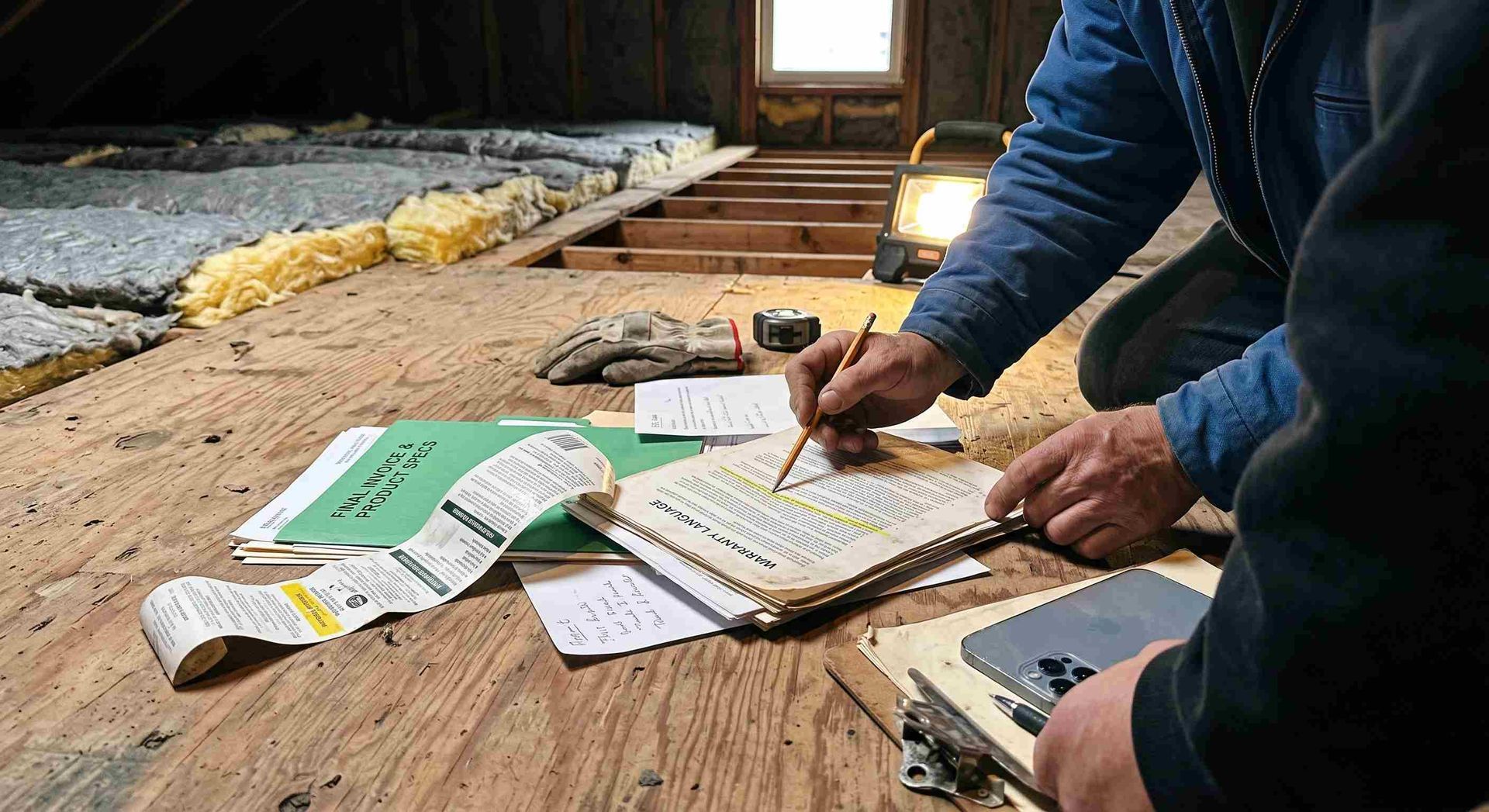
A warranty can sound strong and still leave important gaps. Find out whether it covers material, workmanship, or both. Check the term and the process for filing a claim.
Ask who pays for access or removal if a covered issue appears. Ask whether the warranty transfers to a future owner. Keep the final invoice and product records with the warranty. A contractor who puts these terms in writing gives the customer a clearer path if a problem shows up later.
What Buckeye Insulation Pros Recommends Before a Deposit
Take a few minutes to compare the job, not the sales pitch. Confirm the product identity, application area, thickness, prep, and warranty. Confirm that the contractor will document what was installed.
An unusually low quote is not an automatic reason to walk away. It is a reason to ask better questions. A contractor with a sound scope should be able to explain the price without hiding behind vague claims. Sam’s Spray Foam Insulation believes property owners should know the product, thickness, scope, and warranty before approving a project.
Frequently Asked Questions About Low-Cost Spray Foam
The Best Deal Is the One You Can Verify
Price matters. So do scope, product records, workmanship, and accountability.
A strong bid tells you what is going into the building and what the contractor will do before, during, and after the spray work. That gives the property owner a fair way to compare competing offers.
Very low pricing deserves scrutiny, not fear. Ask for proof, compare the same scope, and choose the contractor who gives you the clearest path from quote to finished work. Want to compare your options before making a decision? Request an insulation quote and we’ll walk you through the scope, materials, and pricing.